
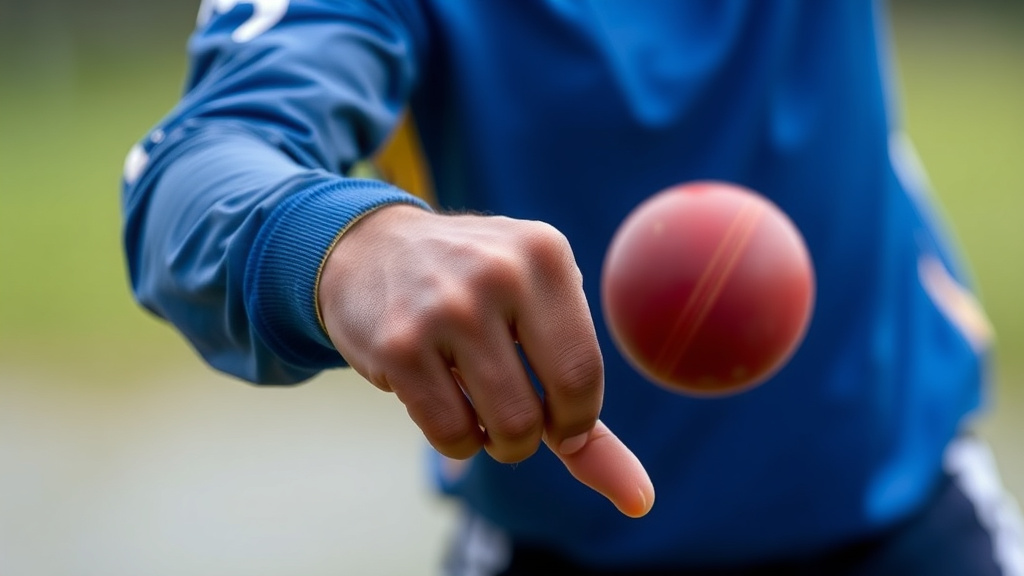
Spin bowling stands as one of cricket’s most engaging and technically challenging disciplines. While fast bowlers rely on raw pace, spin bowlers must perfect the intricate art of finger positioning and wrist technique to trick opposing batsmen. This article explores the essential skills that differentiate experienced spinners from novice players, assessing how exact hand positioning and regular wrist rotation create the spins needed for quality bowling. Whether you’re someone pursuing cricket or enthusiast seeking deeper understanding, developing these fundamental skills is vital for bowling success.
Finger Position and Grip Essentials
The foundation of successful spin bowling begins with understanding how your fingers engage with the cricket ball. The grip you develop dictates the amount of spin imparted and the direction of ball movement. Your first and second fingers should serve as the primary contact points on the ball’s surface, positioned slightly apart to create the required friction. The ring finger and pinky give subtle support, while your thumb sits beneath for stability. This arrangement enables bowlers to produce maximum rotational force while keeping control throughout the bowling action.
Achieving the proper finger position demands consistent practice and focused care to hand placement. For off-break bowling, your fingers should be positioned across the ball’s seam, with the first finger shouldering the main duty for creating spin. The middle finger operates together, creating the typical spinning motion that cause the ball to deviate after pitching. Your palm should stay reasonably solid but not rigid, allowing natural flexibility during release. Many emerging spinners face early difficulties because they grip the ball too tightly, which restricts finger movement and diminishes spin output significantly.
The hand tension you maintain throughout your spinning delivery significantly affects spin reliability and accuracy. A moderate grip allows your fingers to work freely during the critical moment of release, where spin is actually created. Practice developing consistent technique by bowling repetitive deliveries, concentrating solely on maintaining identical finger positions across several deliveries. Your hand should feel at ease and relaxed, not strained or awkward. Recording your technique and matching it with expert bowlers assists in spotting inconsistencies that might undermine your spin bowling results and development.
Wrist Turn and Release Mechanics
Wrist rotation represents the basis of effective spin bowling, shaping ball trajectory and spin rate. The bowler’s wrist must perform a smooth, regulated motion that starts at the delivery stride and persists until release. This rotational movement generates the angular momentum needed to impart revolutions on the cricket ball. Consistency in wrist action delivers predictable outcomes, allowing bowlers to reproduce shots and preserve accuracy. Elite spinners build muscle memory through focused training, enabling their wrists to perform identical rotations repeatedly, regardless of match pressure or fatigue.
The release mechanics demand precise timing and coordination between wrist rotation and finger engagement. As the ball departs from the hand, the wrist must complete its rotational arc while fingers at the same time apply their intended grip pressure. This synchronized action determines spin axis, velocity, and trajectory characteristics. Bowlers must preserve a stable wrist position throughout the delivery stride, avoiding excessive deviation that compromises control. The final finger flick at release amplifies spin generation, making the timing of this movement essential for achieving desired ball behavior on the pitch.
Advanced Spin Variations and Practice Methods
Mastering advanced spin variations requires spinners to build upon fundamental techniques while creating advanced bowling methods. Accomplished bowlers blend precise finger placement with consistent wrist rotation to perform complex variations like the googly spin, doosra, and carrom spin. These complex deliveries require prolonged training, building muscle memory, and thorough comprehension of how minor changes produce vastly different ball movements. Ongoing practice in match scenarios helps bowlers refine their capacity to conceal deliveries while preserving consistency and control throughout extended bowling spells.
- Film analysis reveals top bowlers’ finger placement secrets
- Nets training with different field positions improves decision-making
- Bowling machines help develop consistent wrist rotation patterns
- Match simulation training strengthens mental toughness and concentration
- Video feedback sessions speed up skill development rates
Dedicated practice methods distinguish skilled spinners from casual performers in high-level cricket competition. Following systematic training routines that emphasize repetition, video analysis, and progressive difficulty guarantees ongoing skill development. Collaborating with veteran instructors delivers crucial insights on finger positioning and wrist action, spotting minor technical issues that impair execution. Consistent training with skilled batsmen in realistic match scenarios strengthens composure and tactical awareness, helping practitioners to deliver different deliveries successfully under challenging circumstances while maintaining the precise finger positioning and consistent wrist rotation required for continued excellence.
