
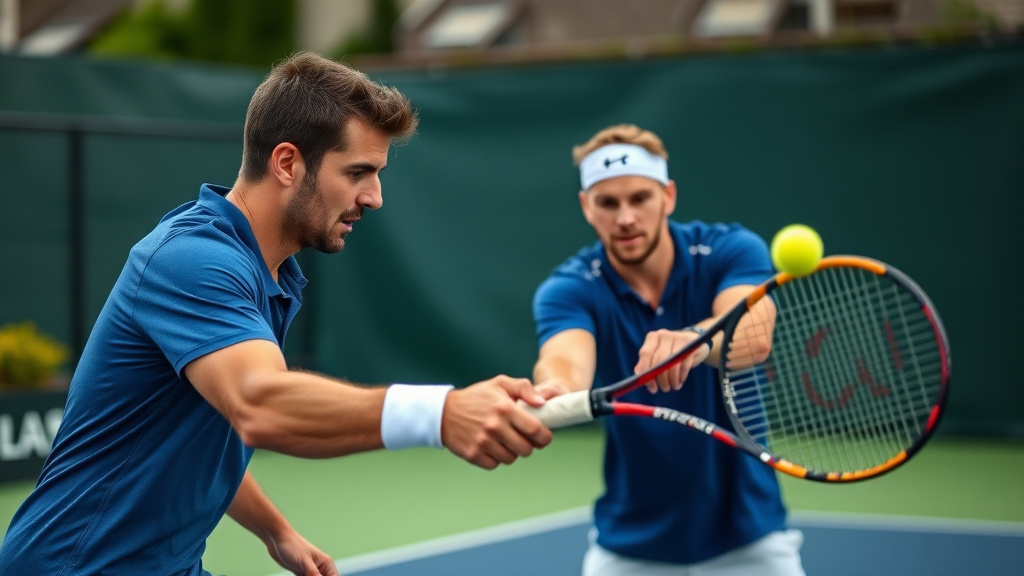
What separates Wimbledon champions from the rest of the tennis world? Beyond natural ability and competitive drive lies a carefully guarded arsenal of coaching techniques that elevate their game to extraordinary levels. In this exclusive exploration, we reveal the intensive training regimens, innovative practice techniques, and psychological conditioning approaches employed by tennis’s elite. Discover how champions perfect their serving technique, achieve rapid court mobility, and maintain peak performance under pressure—insights that reveal why these athletes consistently dominate the grass courts of SW19.
Advanced Physical Conditioning Techniques
Wimbledon champions utilize cutting-edge conditioning methods that transcend conventional tennis preparation. These top competitors utilize systematic training blocks that deliberately rotate between high-intensity intervals and recuperation phases. By manipulating training variables such as training load, effort intensity, and length, players improve their heart and lung endurance and muscle stamina. Sport scientists partnering with top players have designed individualized conditioning plans that target the unique requirements of grass surface competition, ensuring athletes maintain dynamic strength throughout five-set marathons while lowering injury likelihood.
Power development represents a key pillar of modern Wimbledon readiness, with champions emphasizing movement patterns that boost court performance. Rather than traditional weightlifting, these players emphasize compound exercises that develop stability, rotational power, and directional agility. Medicine ball throws, explosive drills, and band resistance training develop the movement system essential for explosive serving and swift movement transitions. Coaches meticulously program these sessions to support on-court practice, ensuring players build the strength endurance required to perform challenging strokes consistently during tournament play.
Recovery protocols distinguish champions from competitors, as elite players understand that improvements happen during rest periods. Wimbledon-bound athletes employ advanced recovery techniques such as cold therapy, contrast water therapy, and specialized massage therapies. Sleep optimization proves essential, with many champions following strict sleep schedules and using sleep tracking technology to monitor rest quality. These detailed recovery methods speed up muscle repair, reduce inflammation, and improve cognitive function—critical factors when competing in consecutive matches across fortnight-long tournaments.
Range of motion training attracts considerable emphasis in contemporary elite competition. Champions commit significant training time to active flexibility work, yoga practice, and targeted mobility exercises that preserve optimal range of motion. This forward-thinking method prevents typical court-related injuries while enhancing movement quality across the court. By maintaining superior flexibility, players execute precision strokes with greater precision and limit compensatory movement patterns that produce susceptibility to injury. Structured flexibility training ensure athletes stay durable throughout intense tournament circuits.
Sport-specific conditioning drills mirror competitive pressures with impressive precision, conditioning top performers for high-pressure competition. Coaches create court-specific drills that replicate point-play sequences, movement patterns, and metabolic strain faced during match situations. This work employ alternating intensity protocols, alternating explosive efforts with short rest intervals that mirror genuine match tempo. By conditioning metabolic pathways under match-specific conditions, athletes build greater physical resilience and competitive fortitude crucial for navigating pressure-filled moments.
Performance analysis and physiological tracking have revolutionized how champions enhance their conditioning regimen. Top-tier competitors undergo regular lactate threshold testing, VO2 max assessments, and body composition analysis to monitor conditioning progress. Live tracking systems deliver coaches with immediate insights on player exertion levels during practice sessions, enabling precise prescription of workout intensity levels. This evidence-based method eliminates guesswork, allowing customized training protocols that maximize performance gains while reducing overtraining and burnout during important competitive preparation periods.
Emotional Resilience and Mental Coping Approaches
Mental strength separates Wimbledon champions from their competitors. Elite players develop psychological systems that help them to maintain composure during key moments, converting pressure into performance advantages. Through systematic mental training, champions cultivate unwavering confidence, emotional regulation, and the skill to rebound from setbacks rapidly. These psychological approaches prove as important as physical conditioning, allowing players to deliver with precision when stakes are highest and opponents are most formidable.
Visual Focus and Attention Training
Wimbledon champions employ advanced visualization techniques to mentally prepare for matches before entering the court. This practice includes clearly picturing effective shot-making, anticipated opponent responses, and various match scenarios. By regularly visualizing peak execution, athletes strengthen neural pathways that support superior execution during real match play. Champions dedicate considerable time in visualization sessions, regarding visualization with equal intensity and commitment they apply to physical training, thereby improving match readiness and competitive confidence.
Focus training constitutes another pillar of mental conditioning for professional tennis athletes. Champions build laser-sharp concentration abilities, filtering out distractions and sustaining focused attention on each point. Through meditation, mindfulness exercises, and targeted focus drills, players train their minds to maintain presence and engagement throughout complete matches. This enhanced mental focus enables champions to make split-second decisions, adapt their approach, and maintain emotional equilibrium during demanding match situations on grass courts.
- Breath control regulate nervous system throughout high-pressure matches
- Affirmative self-messaging reinforces confidence and mental strength
- Building consistent habits establishes mental stability and performance cues
- High-pressure training drills enhances mental toughness under pressure
- Mindfulness training improves focus and situational awareness
Professional sports psychologists partner with Wimbledon champions, designing personalized mental strategies tailored to personal competitive approaches and behavioral patterns. These specialists conduct regular sessions examining performance metrics, identifying mental patterns, and executing specific techniques. Champions maintain detailed mental performance journals monitoring emotional responses, focus levels, and performance catalysts across competitive events. This evidence-based method to psychological preparation supports ongoing development and maximum psychological fitness for championship performance.
Specialized Court Abilities and Strategic Expertise
Grass Surface Adaptation and Surface Mastery
Wimbledon’s grass courts require focused conditioning that surpasses traditional hard court preparation. Champions commit significant hours to grass court drills, working on genuine grass courts to comprehend the ball’s different behavior. The lower friction and faster pace necessitate adapted movement, modified serve techniques, and refined approach shots. Elite players study grass court physics extensively, analyzing bounce patterns and flight pattern shifts. This dedicated surface preparation starts several months prior to the tournament, guaranteeing their muscle memory and tactical understanding match precisely with Wimbledon’s unique playing conditions and rigorous demands.
Tactical court placement becomes paramount on grass, where court positioning errors result in immediate punishment. Champions cultivate outstanding predictive abilities through targeted practice sessions that emphasize early movement and aggressive net play. Their training includes rapid-response drills and match-like situations specific to grass conditions. Mental preparation focuses on embracing the surface’s unpredictability while maintaining composure during rallies. Advanced video analysis systems help players recognize ideal court positions, court coverage strategies, and movement efficiency. This comprehensive approach transforms potential weaknesses into competitive advantages, allowing champions to leverage grass court dynamics while minimizing their opponents’ opportunities.
Tactical Serve Development and Placement Accuracy
The serve is tennis’s most controllable shot, and Wimbledon champions spend significant effort perfecting its execution. Their training programs emphasize serve variety, building various pace options, spins, and placements to keep opponents guessing. Champions work on positioning with meticulous accuracy, focusing on specific court zones repeatedly until accuracy becomes automatic. Sophisticated technical assessment identifies optimal serving mechanics, enhancing both power and consistency. Training features high-pressure scenarios replicating competitive play, ensuring serves perform dependably during key points. This meticulous approach transforms the serve into a powerful tool, often generating direct winners or creating advantageous situations for follow-up shots.
Tactical serve placement goes further than simple power delivery, integrating tactical court positioning and opponent analysis. Champions extensively analyze how opponents return serves, pinpointing vulnerabilities and tendencies that inform serve placement choices. Training sessions feature simulated match scenarios where players practice serve selection based on specific game situations, opponent positioning, and tactical objectives. Mental preparation focuses on serve confidence, allowing players to execute planned strategies when facing pressure without hesitation. This advanced method views serving like a chess-like tactical element rather than merely a stroke, providing champions with consistent competitive advantages throughout tournament play.
Net Court Mastery and Net Volley Skill
Grass courts favor attacking at the net, leading Wimbledon champions to develop outstanding volleying abilities through intensive specialized training. Their workout routines include numerous repetitive vollying exercises, developing touch, reflexes, and court awareness necessary for net control. Champions practice from multiple distances, practicing angles, depth control, and defensive positioning. Complex footwork training enhance their ability to reach difficult volleys while preserving stability and repositioning ability. Strategic instruction highlights net-level decision skills, instructing players when to attack aggressively versus playing defensively. This complete volleying command turns scoring chances at the net into trustworthy scoring situations, substantially shifting competitive flow in champions’ favor.
Moving from baseline to net requires smooth implementation, a skill Wimbledon champions sharpen regularly throughout their competitive seasons. Champions practice approach shots regularly, cultivating consistency and placement precision that establishes advantageous court positions. Training incorporates movement patterns that emphasize effective court movement while maintaining offensive positioning. Mental preparation focuses on composure in transition situations, enabling players to commit fully to attacking tactics without hesitation. Modern analytical tools monitor transition effectiveness, revealing patterns and development areas. This comprehensive strategy elevates net execution from sporadic strategic choice into a dependable, powerful component of top competitors’ competitive arsenals throughout Wimbledon competition.
